info@rhenac.de
  +49 2242 9061 120
  DE
DE 

Lighting challenges in modern environments
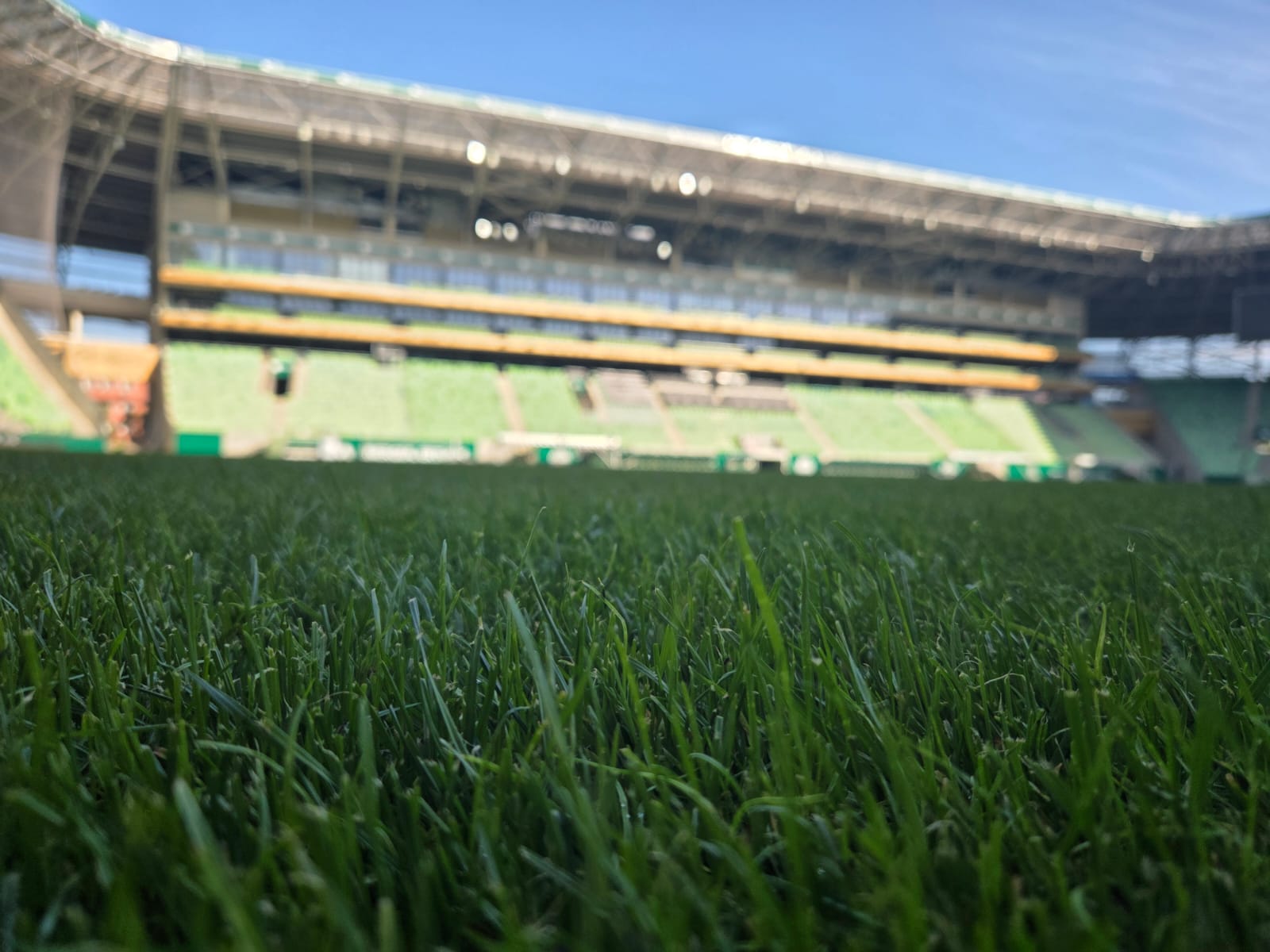
Natural turf stadiums pitches faces a common but often overlooked problem: even with artificial lighting, grass can suffer from insufficient light. Shadows from stands, roofs, and surrounding structures reduce natural sunlight, making it harder for turf to grow, regenerate, and stay healthy.
Why low light levels affect turf growth
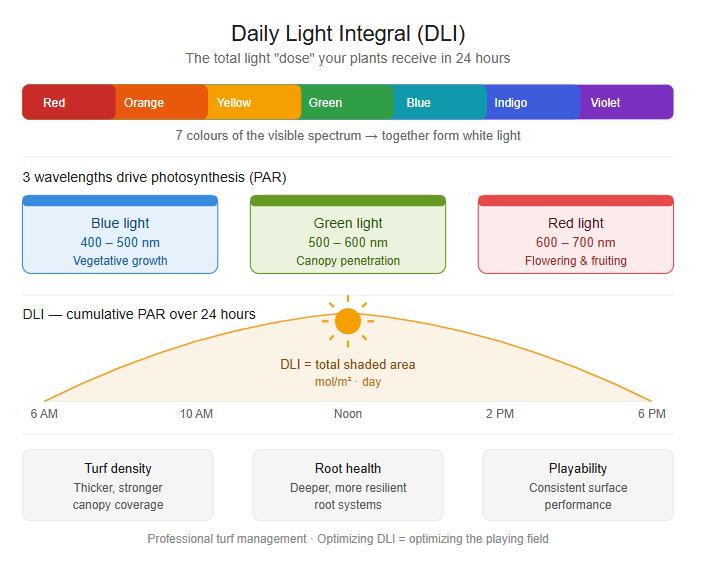
The main issue is a misunderstanding of the light spectrum. Grass needs the right quality and quantity of light to thrive. Without enough of the Daily Light Integral (DLI) – the total light a plant receives in a day – turf can show morphological changes, weaker growth, increased susceptibility to disease, and reduced nutrient efficiency in the soil.
What is Daily Light Integral (DLI)?
The light spectrum consists of seven visible colours, which together form white light. However, only part of this spectrum plays a key role in plant growth over a 24-hour period—this is referred to as the effective light used in the Daily Light Integral (DLI).
Think of DLI as a “daily light dose.” While light intensity represents only a momentary measurement, DLI measures the total amount of photosynthetically active radiation (PAR) a plant receives over 24 hours. It is not just about how bright the light is at a given moment, but about the cumulative energy available for photosynthesis and growth.
Common mistakes in artificial turf lighting
Optimising DLI is essential for maintaining strong root development, high turf density, and consistent playability in professional turf management.
Therefore, artificial lighting is required to supplement DLI and compensate for insufficient natural light.
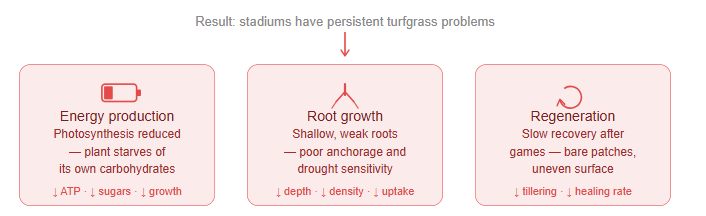
Many lighting systems try to simulate sunlight without considering its spectrum, required intensity, or duration needed for effective growth. As a result, even with artificial light, some stadiums still face issues with energy production in plants, root development, and turf regeneration.
Rhenac’s approach to optimising DLI in stadiums
Rhenac has developed LED lighting systems in collaboration with the Technical University of Munich. Through multi-year research projects, scientists have demonstrated that Rhenac’s proprietary LED systems not only enhance light quality but also significantly reduce energy consumption.
At Rhenac, these findings are applied in practice by analysing the relationship between LED lighting and DLI across different stadium environments. By calculating the DLI requirements for each stadium sector and adjusting the lighting accordingly, the grass receives the light it needs for photosynthesis.
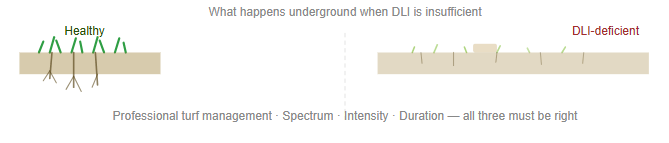
This results in improved turf quality, including stronger growth, higher density, and better overall performance.