info@rhenac.de
  +49 2242 9061 120
  DE
DE 

Light Is Essential — But Only Up to a Point
We often assume that more light means better turf growth. In reality, grass operates within a defined daily light threshold, known as the Daily Light Integral (DLI).
Once this threshold is exceeded, additional light no longer supports growth. Instead, it can create physiological stress, overheating and visible symptoms that may look similar to disease, drought stress or nutrient deficiency.
Modern LED systems with smart DLI control address this issue by delivering the right amount of light, at the right time, and preventing unnecessary stress on the plant.
Why Excess Light Becomes Stress
Too much light does not simply slow growth — it can damage the plant. When turf receives more energy than it can process, multiple stress pathways are triggered simultaneously, often accelerating turf deterioration.
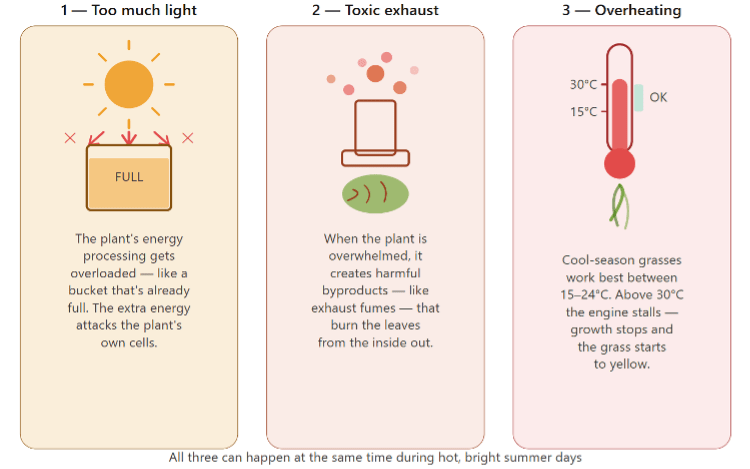
1. Photoinhibition – When Grass Gets More Light Than It Can Use
At high light levels, the plant’s photosynthetic system becomes saturated. As a first response, the grass reduces its activity to protect itself. However, prolonged exposure can damage key cellular structures faster than they can recover.
In cool-season grasses, efficiency is already close to its maximumat just 50% of full sunlight, meaning any extra light becomes wasted energy that adds stress rather than supporting growth.
2. Oxidative Stress – Damage Inside the Plant Cells
When light and heat are too extreme, the plant can produce excess energy that cannot be used safely. This can lead to harmful molecules called reactive oxygen species, or ROS. Under normal conditions, antioxidants neutralize these compounds. However, during periods of extreme light and heat, this defense system becomes overwhelmed.
The result is cumulative cellular damage, premature aging, discoloration, and thinning turf density. What often appears as nutrient or water stress is frequently driven by oxidative imbalance.
3. Heat Stress – Radiative Load and Growth Shutdown
High-intensity light also increases canopy temperature through radiative heat load. For cool-season species such as bentgrass or ryegrass, optimal growth typically occurs between 15°C and 24°C. Once temperatures exceed ~30°C, key metabolic processes begin to decline.
Enzymes such as Rubisco lose efficiency, photosynthesis slows, and the plant can no longer convert light into usable energy. Instead, excess energy is converted into heat, accelerating stress and chlorophyll breakdown, ultimately leading to yellowing and reduced turf density.
In stadium environments, this creates a critical balancing challenge: adding artificial light during already warm conditions can intensify heat stress rather than improve turf quality.
Why Fixed-Schedule LED Systems Fall Short
Many LED grow light systems still operate on fixed schedules, independent of real-time environmental conditions. While this may ensure consistency, it ignores one critical factor: natural sunlight variability.
On bright days, turf may already reach its daily light limit. If artificial lighting continues regardless, it causes DLI overshoot—delivering more light than the plant can use. This does not improve growth; it increases stress and canopy temperature.
The effects are often delayed and subtle:
- weakened root development
- reduced turf density
- higher disease susceptibility
Because symptoms appear gradually, the true cause is frequently overlooked.
The Shift to Dynamic Light Management
Modern turf management is moving away from static timing systems toward real-time light control. Sensor-based approaches adjust artificial lighting based on actual sunlight conditions, ensuring that turf receives only the required amount of light.
Studies show that dynamic systems can reduce artificial light usage by 20–30%, while simultaneously lowering stress levels and improving turf consistency.

The Solution: Real-Time DLI Control with Rhenac
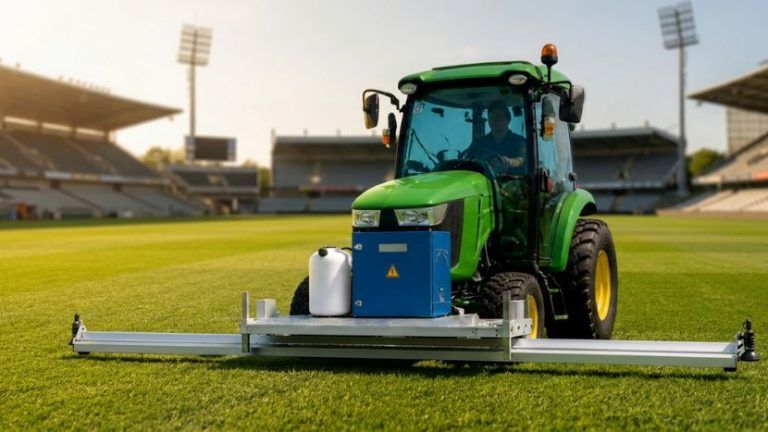
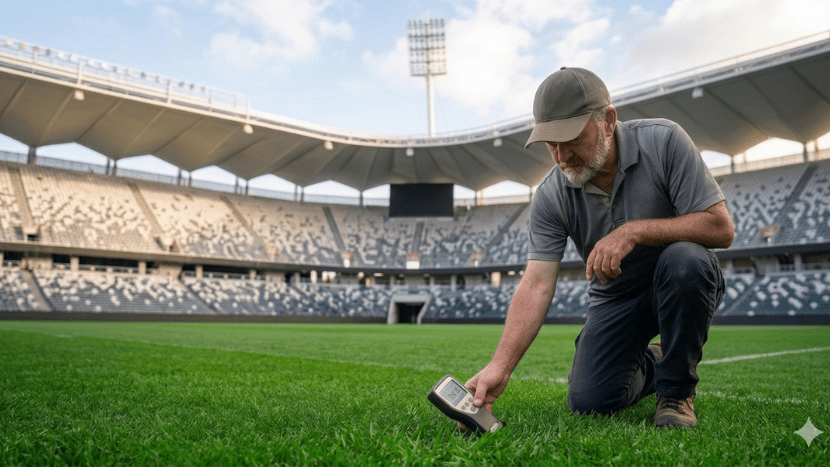
The Rhenac system represents a data-driven approach to turf lighting. It uses canopy-level quantum sensors to measure both natural sunlight and artificial light contribution in real time, continuously tracking daily light integral.
Through a Gap-Fill strategy, the system precisely adjusts LED output to compensate for light deficits while avoiding oversupply. This ensures optimal turf conditions without exceeding physiological limits. In simple terms, it fills the light gap only when the plant needs it.
Beyond artificial lighting control, Rhenac also supports:
- Protection from extreme natural light: Even when artificial lighting is off, excessive natural sunlight can create heat and oxidative stress. Monitoring canopy temperature and applying cooling strategies helps identify periods of excessive stress and protect plant function.
- Data-driven recovery strategies: DLI tracking enables identification of overshoot events and supports targeted turf recovery by reducing light stress and supporting the plant’s natural repair processes.
Conclusion
Light is one of the most powerful tools in turf management — but only when it is precisely controlled. When unmanaged, it shifts from a growth driver to a stress factor, triggering photoinhibition, oxidative damage, and heat stress.
The future of turf care lies in real-time, adaptive light management that treats light as a controlled resource rather than a constant input.